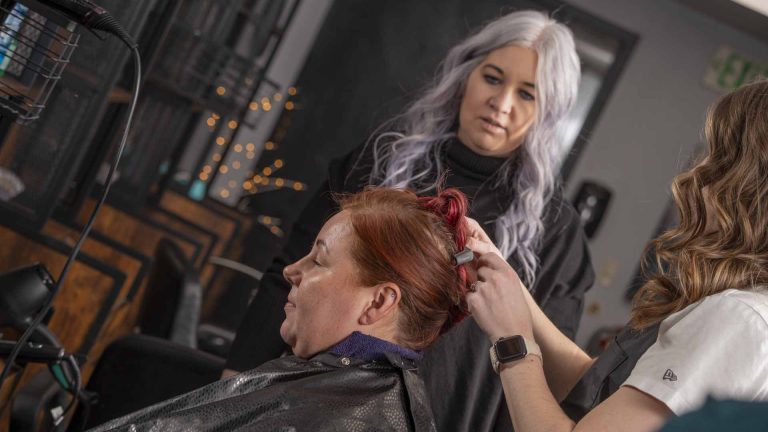
If you’re considering a career in the beauty industry, you may be wondering what you can do with a cosmetology license. While many people associate cosmetology primarily with cutting and styling hair, cosmetology training can prepare you to provide a variety of beauty services.
A cosmetology license can open the door to careers in salons, spas and other beauty settings. Your training can also give you the foundation to specialize in the services you enjoy most. For aspiring beauty professionals, cosmetology can offer several career paths, from working as a hairstylist to exploring makeup artistry or eventually starting your own beauty business.
In Idaho, becoming a cosmetologist starts with completing the required education and licensing process. At Austin Kade Academy, our cosmetology course consists of 1,600 hours of training, giving students the opportunity to develop their skills through classroom instruction and hands-on experience.
What Does a Cosmetology License Allow You to Do?
A cosmetology license can allow you to perform a range of professional beauty services, depending on the scope of your state license and the services you’re trained and authorized to provide.
Some of the most common career opportunities include:
- Hair cutting
- Hair styling
- Hair coloring
- Chemical hair services
- Manicures and pedicures
- Basic skincare and beauty services
- Salon and client services
Cosmetology is a broad field, which is one reason it can be appealing to people who want variety in their work. Whether you want to work as a licensed cosmetologist in a salon or spa, develop a specialty or explore other cosmetology careers, your education can provide a foundation for professional growth.
1. Become a Hairstylist
One of the most common career paths for a licensed cosmetologist is working as a hairstylist.
Hairstylists may provide services such as:
- Haircuts
- Blowouts
- Hair styling
- Hair coloring
- Highlights and other color services
- Formal hairstyles
- Chemical treatments
Working with hair can also give you the opportunity to develop a specialty. Some stylists focus primarily on color, while others specialize in cutting, styling, extensions or special-event hair. For example, you could work toward becoming a hair color specialist or focus on hairstyling and makeup artistry for weddings and other special events.
Hair stylists who enjoy creative work can also explore opportunities involving personal style consultations, helping clients choose looks that complement their preferences and lifestyles.
2. Work in a Salon
A cosmetology license can allow you to pursue employment in a professional salon.
Working in a salon can provide an opportunity to build your skills, develop relationships with clients and gain experience in the beauty industry. As you gain experience, you may develop a loyal clientele and specialize in the services you enjoy most.
Salons can also provide an environment where newer cosmetologists can continue learning from experienced professionals. You may begin by working alongside other beauty professionals, eventually moving into a salon chair of your own as you develop your skills and client base.
With additional experience and business skills, some cosmetologists pursue positions as a salon manager, overseeing scheduling, customer service and day-to-day operations. Others may eventually become a salon owner and manage their own team.
3. Provide Hair Color Services
If you enjoy creativity and working with different looks, hair coloring can become an important part of your career.
Cosmetologists may work with clients to create everything from subtle color changes to more dramatic transformations. Color services can include highlights, lowlights, dimensional color and other techniques covered by your training and licensing.
Developing strong color skills can also help you establish a specialty within the beauty industry. A hair color specialist may build a reputation for particular techniques, attract clients seeking those services and develop a recognizable personal style.
Some beauty professionals eventually work with a major beauty brand, exploring opportunities in product education, demonstrations or other roles related to professional hair care.
4. Provide Nail Services
Cosmetology training can also introduce students to nail care and related beauty services.
If you discover that you particularly enjoy working with nails, you may decide to pursue additional education or a specialized nail technology license. In Idaho, Austin Kade Academy also offers a 600-hour Nail Technology course for students interested in focusing specifically on nail services.
Choosing the right license and training program depends on the services you want to provide as a beauty professional. A nail technician can focus on manicures, pedicures and other nail care services, potentially developing a specialty in nail art or building a dedicated clientele over time.
5. Work in Other Beauty and Personal Care Settings
A cosmetology license doesn’t necessarily mean you have to spend your entire career in a traditional hair salon.
Depending on your training, licensing and career goals, you may find opportunities in different beauty and personal care environments. Some cosmetologists work in salons, spas, resorts or other settings where professional beauty services are provided.
Your career options will depend on your specific license, additional training and the requirements of the workplace.
Other beauty-related career paths may involve makeup artistry, skincare or education. For example, a makeup artist may provide makeup services for weddings, photography sessions or special events. A skincare specialist may require separate education and licensing, depending on the services offered.
Those interested in performance makeup artists’ work may also explore opportunities in theater, film, television or live entertainment, although these roles can require additional specialized training and experience. Cosmetologists who enjoy teaching may eventually consider further education to pursue work as cosmetology instructors, subject to Idaho’s instructor licensing requirements.
6. Build Your Own Clientele
Another benefit of becoming a cosmetologist is the opportunity to build your own clientele over time.
As you gain experience, you can develop relationships with returning clients who regularly schedule services with you. Building a strong clientele can become an important part of establishing yourself as a beauty professional.
Some experienced cosmetologists eventually choose to become independent professionals or operate their own businesses, subject to applicable licensing and business requirements.
If you want to own a beauty business, you could explore renting a salon chair, providing services independently or eventually opening your own salon. Some professionals also consider a mobile beauty business, traveling to clients to provide services where permitted by their license and local regulations.
Running a beauty business involves more than providing great services. Business skills such as marketing, appointment management, budgeting and customer service can help you manage daily operations and build lasting client relationships.
7. Specialize in the Services You Enjoy
You don’t necessarily have to provide every type of beauty service covered by your education.
As your career develops, you may discover that you particularly enjoy one area of cosmetology. For example, you might decide to focus on:
- Hair coloring
- Hair cutting
- Bridal and formal styling
- Men’s hairstyling
- Extensions
- Creative styling
- Client consultations
Your education provides a foundation, while experience can help you determine which areas you want to pursue further.
You may also explore makeup artistry, hairstyling and makeup artistry for special events or other beauty services that complement your interests. Many makeup artists develop a personal style that helps distinguish their work and attract clients who appreciate their approach.
Getting real world experience can help you identify which services you enjoy most and which career paths align with your strengths. Over time, you can develop a professional portfolio, build relationships with clients and explore opportunities that fit your long-term goals.
What Do You Learn in Cosmetology School?
Before you can begin working as a licensed cosmetologist, you’ll need to complete the required education and licensing process.
At Austin Kade Academy, the 1,600-hour cosmetology program gives students extensive time to learn and practice the skills involved in professional cosmetology.
Training can include areas such as:
- Hair cutting
- Hair styling
- Hair coloring
- Chemical services
- Skin care
- Nail care
- Sanitation and safety
- Client communication
- Professional practices
Hands-on practice is an important part of cosmetology education. It allows students to work on developing their technique while learning how to provide professional services.
This real world experience can help prepare students for the expectations of working with clients and other cosmetology professionals. While school provides the foundation, continued practice can help you develop the confidence and technical skills needed to pursue your preferred career paths.
How Long Does It Take to Become a Cosmetologist in Idaho?
The time it takes to become a cosmetologist depends on your school schedule and how quickly you complete the required training.
Our cosmetology course consists of 1,600 hours. How long those hours take to complete depends on your weekly schedule, attendance and the school’s program structure.
Once you complete your education, you’ll also need to meet the applicable Idaho licensing requirements before you can begin working as a licensed cosmetologist.
Is Cosmetology a Good Career Choice?
Cosmetology can be a good fit for people who enjoy creativity, working with their hands and interacting with clients.
It can also provide variety. Rather than performing the exact same service every day, cosmetologists may work with different clients, hair types, styles and beauty goals.
Before enrolling in cosmetology school, consider whether you enjoy:
- Working directly with people
- Creative and hands-on work
- Learning new techniques
- The beauty and personal care industry
- Building relationships with clients
- Working in a salon environment
It’s also important to understand that building a successful career takes time. Your education is the starting point, while continued practice and experience can help you develop your skills.
For many people, cosmetology offers the possibility of a rewarding career that combines creativity, personal interaction and professional development. Whether you want to become a hairstylist, explore makeup services, specialize in hair color or eventually own your own business, your goals and interests can help guide your decisions.
You don’t have to decide on a lifelong specialty before enrolling. Exploring different services, gaining real world experience and learning from other beauty professionals can help you discover the direction that suits you best.
Start Your Cosmetology Education at Austin Kade Academy
If you’re asking what you can do with a cosmetology license, the answer is that there are several potential career paths within the beauty industry.
A cosmetology education can give you a foundation in hair, skin and nail services while allowing you to explore different areas of the profession. As you gain experience, you can determine which services and career opportunities are the best fit for your goals.
At Austin Kade Academy, our 1,600-hour Cosmetology course provides students with comprehensive education and hands-on training to help prepare them for a career in the beauty industry.
Learn more about our Cosmetology program or contact Austin Kade Academy to find out how you can get started.